Jardinagem: Dicas para salvar uma planta ZZ
(🇵🇹 & 🇬🇧 )
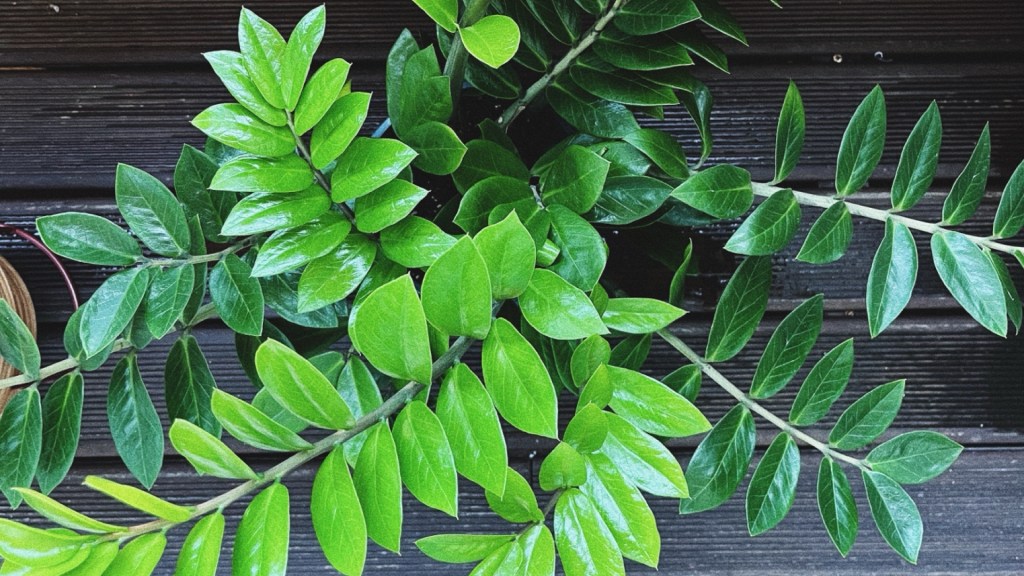
🇵🇹 A ZZ (também conhecida como Zamioculcas zamiifolia) é uma planta conhecida por ser de manutenção relativamente fácil: tolera condições de pouca luz (embora cresça menos nessas condições) e não precisa de muita água. Pelo contrário, na dúvida, é preferível a menos do que a mais.
Ser de fácil manutenção não é um critério que me faça comprar uma planta em detrimento de outra. Gosto de cuidar delas, de as conhecer e às suas necessidades e de ir percebendo as condições que as fazem prosperar.
Foi com este espírito em mente que, em abril de 2024, uma ZZ veio viver cá para casa.
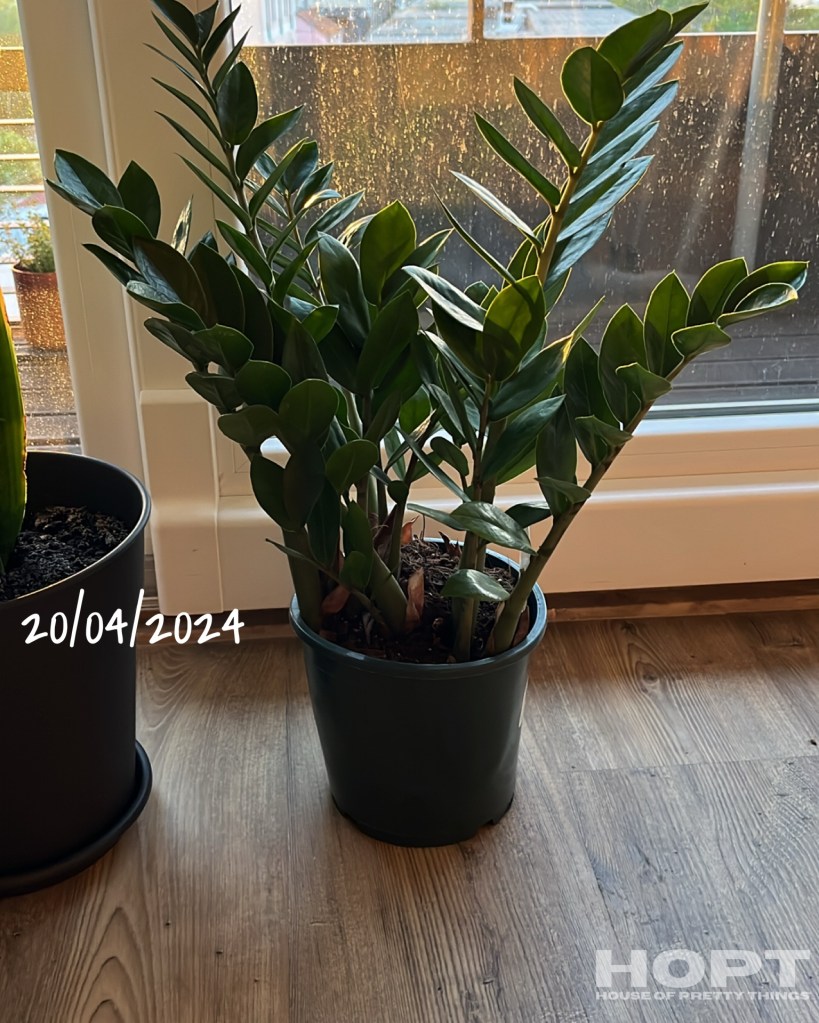
Quatro meses depois, ela continuava (aparentemente) cheia de vida e até tinham nascido novos pés mas, rapidamente, começaram a aparecer algumas folhas amarelas.

É claro que, quando a expectativa é que é fácil manter uma planta, vê-la a começar a dar sinais de que algo não está bem consegue ser bastante frustrante.
Durante algum tempo fui gerindo as folhas amarelas removendo-as, espaçando bastante as regas e garantindo que a terra não permanecia húmida muito tempo.
As folhas amarelas continuaram a aparecer.
A determinada altura, pensei que poderia haver um fungo ou inseto escondido, a causar os sintomas. Inspecionei e limpei bem as raízes, troquei a terra e o vaso. As folhas continuaram a ficar amarelas.
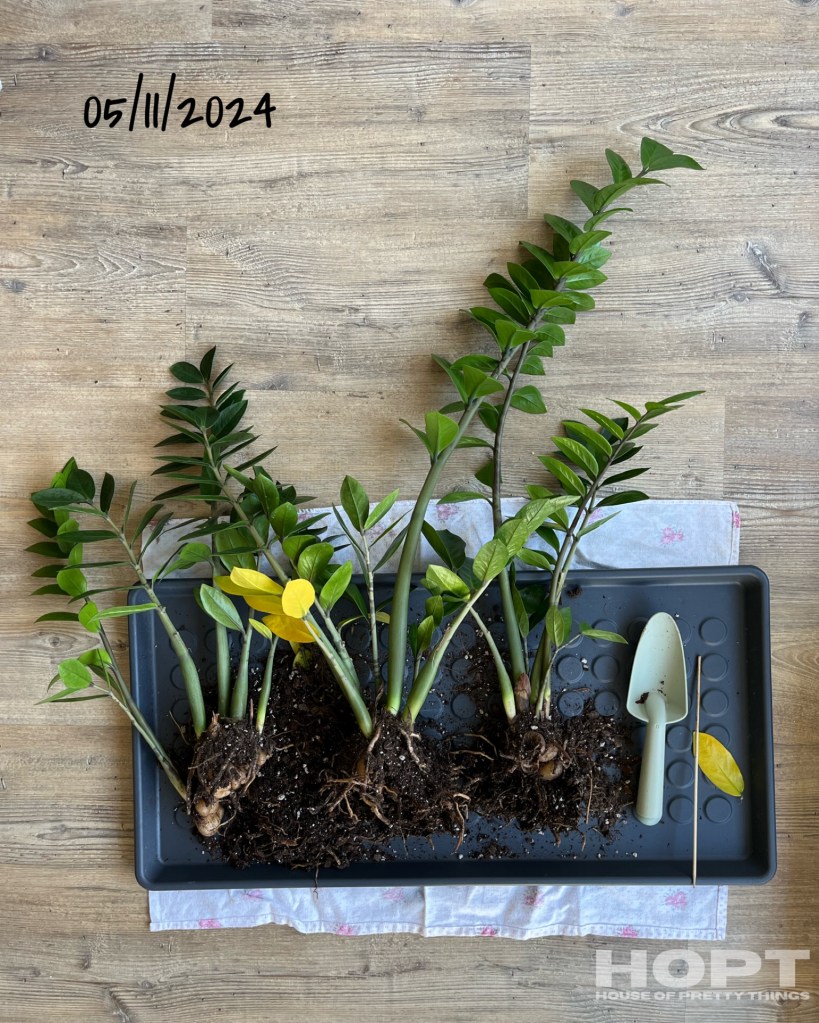
Em novembro voltei a inspecionar as raízes. Foi quando os rizomas (a “batata” que se vê no meio das raízes) e algumas raízes começaram a dar sinais de estarem a apodrecer. Eliminei tudo o que estava nesse estado e plantei cada “conjunto” num vaso diferente.
Olhando para trás, acho que posso ter mexido “de mais” na planta mas, com a pouquíssima água que lhe estava a dar, não fazia sentido nenhum as raízes estarem a apodrecer e só queria conseguir salvá-la, de alguma forma.
À medida que o tempo passava, mais folhas ficavam amarelas e algumas hastes começaram a murchar. Ao fim de alguns meses decidi mudar de estratégia. Depois de ler bastante sobre o assunto – e apesar de encontrar muita informação contraditória – tomei medidas drásticas: cortei todas as hastes e coloquei-as em água, na esperança que ganhassem novas raízes – as imagens abaixo mostram a timeline da evolução.
Nem imaginam a minha felicidade quando, cerca de 7 meses depois, a primeira raíz apareceu!

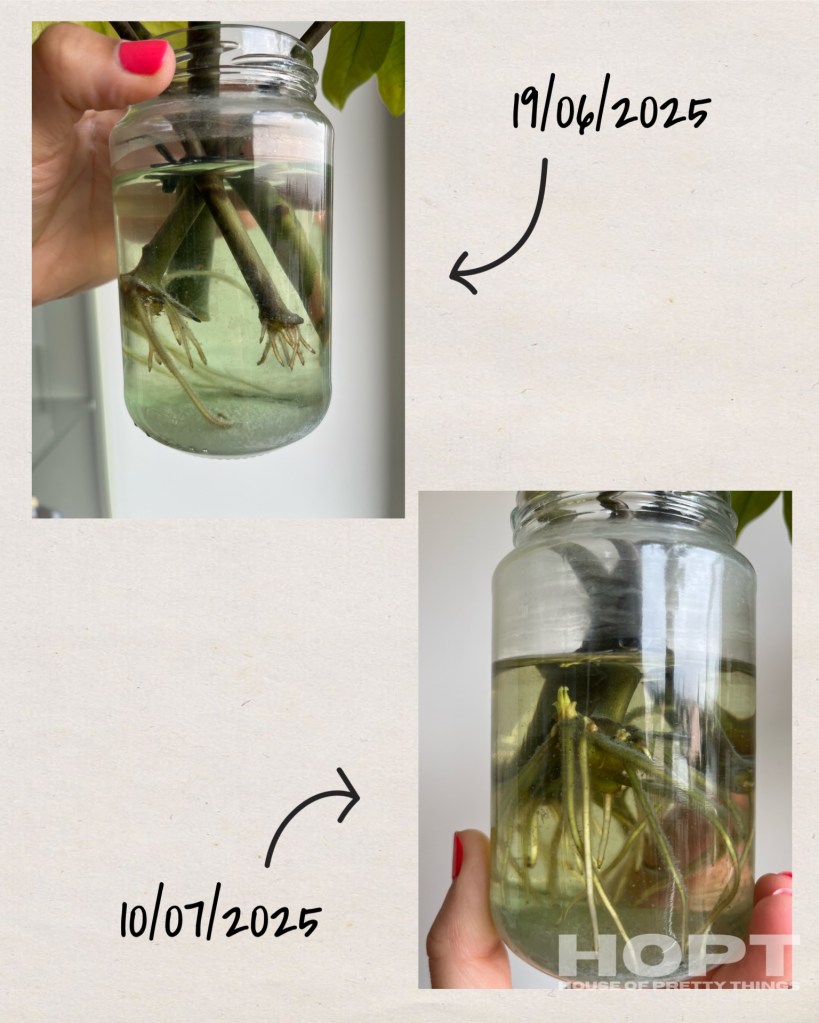
A maioria das hastes acabou por morrer, mas quase 9 meses depois de ter iniciado o processo – que envolveu várias mudas de água e duas aplicações de fertilizante, de que as raízes gostaram muito! – tinha 3 hastes com raízes e pequenos rizomas.
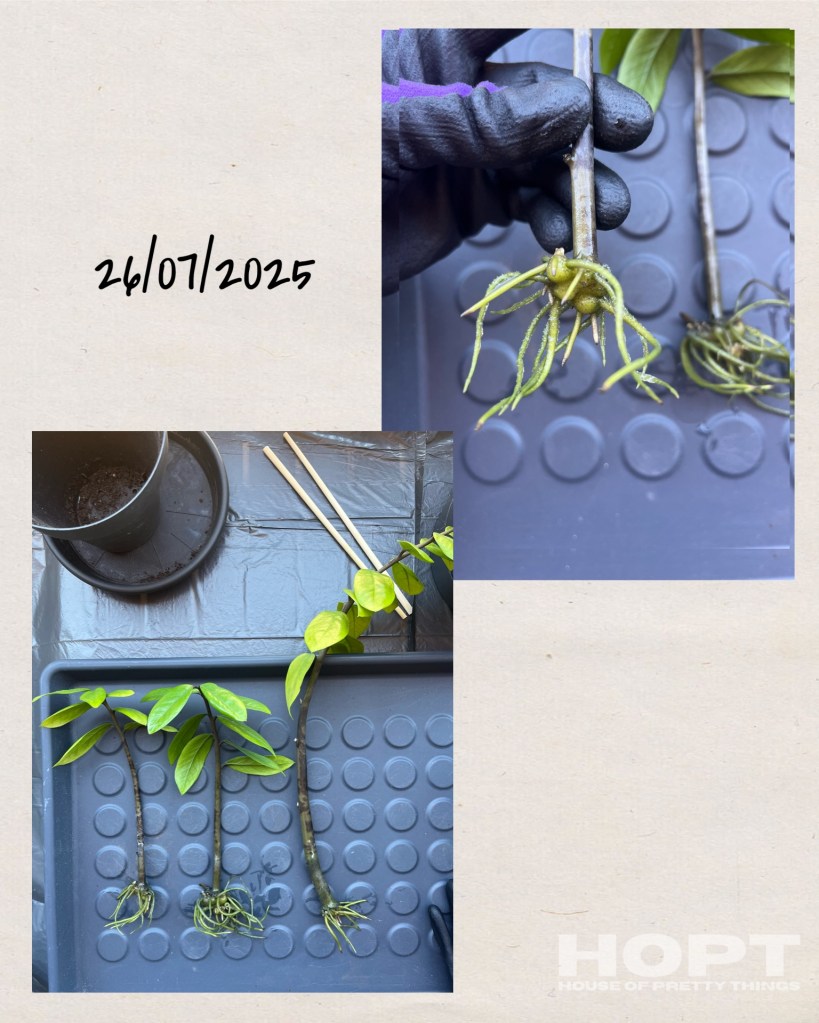
Confesso que não fazia ideia se devia esperar mais tempo ou não para as plantar. Por um lado, mais raízes poderia ser bom, por outro, tinha receio que acabassem por morrer. Decidi arriscar!

Três meses depois, estamos como se vê na imagem acima. As folhas ainda não têm a força e vivacidade típicas desta planta mas, tendo em conta tudo o que ela passou, fico feliz por ser este o estado atual.
As três hastes que sobreviveram e que plantei não voltaram a ter folhas amarelas, embora uma delas sempre tenha tido folhas de uma cor verde menos viva.
Aprendi bastante sobre esta planta ao longo de todo este tempo. Mais do que isso, aprendi que um dos principais ingredientes para a recuperação de uma ZZ se chama paciência. Tem sido uma longa, mas recompensadora, viagem!
🇬🇧 ZZ (also known as Zamioculcas zamiifolia) is a plant known for being relatively easy to maintain: it tolerates low light conditions (although it grows less under these conditions) and doesn’t need much water, on the contrary.
Easy maintenance isn’t really a criterion that makes me buy one plant over another. I enjoy caring for them, studying the species and their needs, and figuring out the conditions that make them thrive.
It was with this mindset that, in April 2024, I bought a ZZ.
Four months later, it was still (seemingly) full of life, but soon some yellow leaves began to appear.
When you expect a plant to be easy to maintain, seeing signs that something might be wrong can be quite frustrating.
For some time, I tried to manage it by spacing out watering and ensuring the soil didn’t stay moist for too long.
The yellow leaves continued to appear.
At one point, I thought there might be a fungus or insect lurking beneath, causing the symptoms. I inspected and thoroughly cleaned the roots, changed the soil and the pot. The leaves continued to turn yellow.
In November, I inspected the roots again. That’s when the rhizomes (the “potato” you see in the middle of the roots) and some roots began to show signs of rotting. I removed everything that was in this state and planted each “set” in a different pot.
Looking back, I think it might have been better to just leave the plant alone and not “over care”, but it made no sense to me that the roots were rotting, and I just wanted to save the plant somehow.
As time passed, more leaves turned yellow and some stems began to wilt. After a few months, I decided to change my strategy. After reading extensively on the subject—and despite finding a lot of contradictory information— I took drastic measures: I cut all the stems and placed them in water, hoping they would grow new roots. The images show the timeline of the root development.
You can’t imagine my joy when, about seven months later, the first root appeared!
Most of the stems eventually died, but almost nine months after starting the process – which involved several water changes and two applications of fertilizer, which the roots loved! – I had three stems with roots and small rhizomes.
I must confess I wasn’t sure whether I should wait longer or not to plant them. On the one hand, more roots might have been good, on the other, I was afraid they would die. I decided to take the risk!
Three months later, my ZZ looks like you can see in the last photo. The leaves still lack the strength and vibrancy typical of this plant, but considering everything it’s been through, I’m happy with its current state.
The three surviving stems I planted haven’t had yellow leaves again, although one of them has always had leaves of a less bright green color.
I’ve learned a lot about this plant over this time. More than that, I’ve learned that one of the key ingredients in a ZZ’s recovery is patience. It’s been a long but rewarding journey!

 House of pretty things
Leave a comment